The Bogota issue
Monserrate vs. Guadalupe: Bogotá's Mountain Rivalry
Bogotá has two sacred peaks glaring at each other across its skyline — one built for crowds, one built for locals — and this is how to climb both without wasting a morning to cloud cover.
By Élodie MarchandA Bogotá weekend that respects the altitude

Every city with real topography eventually produces a rivalry, and Bogotá's is written straight into its skyline: two white-topped peaks glare at each other along the eastern edge of the city, each one claiming to be the mountain that actually defines it. Climb the wrong one on the wrong morning and you get a cable car queue and a gift shop; climb the other and you get switchback dirt, eucalyptus smell, and nobody else on the trail. The honest answer is that you need both — and knowing which one to do on which morning, from where, and with whom, is most of what separates a good week in Bogotá from a great one.
The Establishment: Cerro de Monserrate

Cerro de Monserrate, rising directly above La Candelaria at 3,152 metres, is the mountain that ends up on every postcard, and it earns that spot honestly — on a clear morning the view runs from the red-tile roofs of the old town, past the glass towers of the Centro Internacional, out to the savanna beyond. It's also built for volume. The cable car and funicular run continuously, cabin after cabin, and the whole operation is set up to swallow full tour buses without a queue forming behind them — round trip is COP 35,000 (about $9) Monday through Saturday and on holidays, dropping to COP 21,000 on Sundays. If you'd rather earn it, the pilgrim stairs — 1,605 of them, worn smooth by more than a century of Sunday devotion — are free and suit a smaller party far better than the cable car crowds. They're also the route local Catholics still climb on Holy Week, some on their knees. One honest caveat worth planning around: the funicular occasionally drops to cable-car-only service for maintenance, so it's worth checking before you build a whole morning around riding up one way and walking down the other — there's always a way up, just not always both ways at once. The single non-negotiable piece of advice for Monserrate, repeated by every local who's ever sent a friend up there, is timing: go before 9am. Bogotá's cloud cover rolls in reliably by midday and swallows the view whole, turning a COP 35,000 round trip into a ride up to look at fog.
Plan your Bogota trip
Live prices from our booking partners.
Free cancellation on many rooms. We may earn a commission when you book.
The Underdog: Cerro de Guadalupe
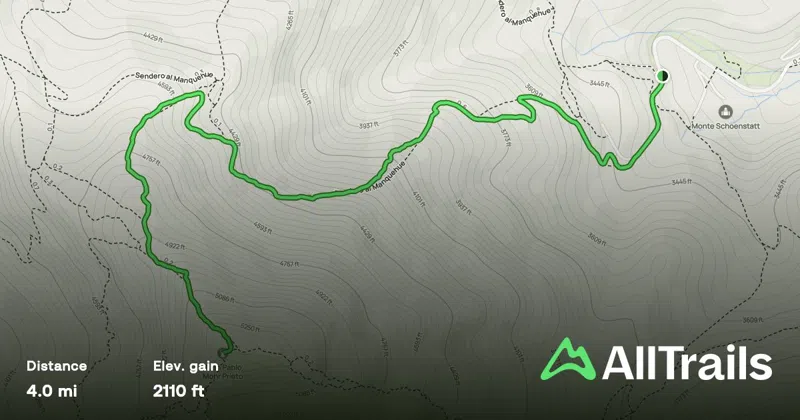
Look south from Monserrate's summit and the other white statue on the other peak belongs to Cerro de Guadalupe & Santuario Nuestra Señora de Guadalupe, rising above the San Cristóbal hills, and it's the mountain locals send you to once they think you've already done the tourist version. There's no cable car, no funicular, no queue — you get there free and easy by car, moto or taxi, then walk the last stretch up to the sanctuary yourself. The trade is thinner crowds and, arguably, a better vantage point, since Guadalupe is the one angle from which you can actually photograph Monserrate whole — cable car, cross and all — against the city behind it. Wear real shoes; the paths around the sanctuary are unpaved and get loose underfoot after rain. For hikers who want to go further than the sanctuary, the connecting Aguanoso high-trail beyond it needs advance booking through the Caminos de los Cerros Orientales app and only runs on weekends — worth building a Saturday around if the ridge walk itself is the point of your trip rather than the summit selfie.

Where to Eat With the View

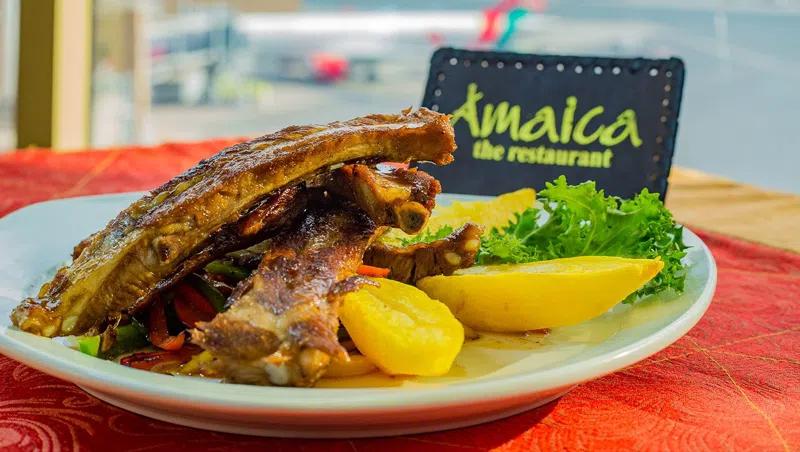
Monserrate's summit isn't just a viewpoint — it's also where Bogotá puts its best mountaintop tables, and the two sit close enough together that choosing between them is really a choice between an occasion and a group lunch. Casa San Isidro, right at the top, is the splurge: fine dining with mains from roughly COP 80,000, reservations recommended and genuinely necessary on weekends, and a dining room built around the money-shot table over the city at sunset — it picked up Tripadvisor's Best of the Best again in 2026. Book the window table if you can get it, and time the visit for last light rather than lunch; the same view that gets swallowed by cloud at noon turns gold a few hours later. For a group that wants a proper lunch rather than a date-night splurge, Casa Santa Clara, its more affordable, more local sibling on the same summit, does traditional Colombian food with buffet service and handles large groups without a reservation headache — the better call for a hiking party coming straight off the pilgrim stairs than for a couple's night out.

The City's Other Mountains
Monserrate and Guadalupe get the postcards, but they're not where Bogotá actually exercises. That's the Quebrada La Vieja Trail, tucked into Chapinero Alto below the ridge — a free but capacity-limited trail that requires an online reservation and runs strict hours: Tuesday to Friday 5–9am, weekends 6–10am, closed Mondays entirely. This is the trail Bogotanos hike before the office, not a tourist circuit, and it's worth including in any itinerary purely as contrast — no summit statue, no cable car, just a steep green corridor and a city waking up below it. Further north, above Usaquén, Cerro de la Cruz is a third, lesser-known cerro that rounds out the reality that this range has many mountains, not two — free but permit-gated through the same cerrosdebogota.org booking portal as Quebrada La Vieja, and guarded only on weekday mornings. Skip it on wet days; the path turns slick fast, and there's no infrastructure up there to bail you out if it does.


Keep Climbing: A Day Trip to Choachí
If two cerros and a quebrada haven't used up your legs, the road past Guadalupe keeps going, and an hour further on it reaches Parque Aventura La Chorrera in the town of Choachí — a community-run waterfall park built for groups, with guides included in the COP 70,000 entry fee, which also covers a packed trail snack. It's the natural next stop for readers who've already done Monserrate and Guadalupe and want a full day out of the city rather than a half-day back inside it, and because it's guided by default, it's a reasonable pick even for travelers who wouldn't attempt the unguided cerro trails alone.

Guided, Group, or Solo: How to Actually Hike These

How you approach the cerros should match who you're traveling with, and Bogotá has a genuine option at every level rather than one default tour everyone gets funneled into. For a straightforward, no-planning group hike, Beyond Colombia runs fixed daily departures that solo travelers can simply join — a Bogotá-founded operator with multiple TripAdvisor Travelers' Choice awards, tours priced roughly COP 80,000–250,000 depending on the route, and reliable enough that you can book it the night before without stress. For something more local and less curated, the Fundación Colombiana de Caminantes Sal Si Puedes is a hiking club and community foundation more than 60 years old, explicitly group-oriented, welcoming drop-ins on most routes for a low fixed fee booked over WhatsApp — genuinely the most authentic way to hike the cerros alongside Bogotanos rather than a bus full of other tourists, though it takes more initiative to arrange than a hotel-desk tour. If you'd rather have a private, English-speaking guide and skip both the bus and the WhatsApp thread, Sacred Treks runs private and small-group routes across Monserrate, Chingaza and Cruz Verde, quote-based and starting around $100+ USD per group — the boutique option, worth it if you want a guide who'll actually answer questions about what you're looking at rather than just set the pace and count heads.


The View That Settles the Argument

There's exactly one place in the city that resolves the Monserrate-versus-Guadalupe argument outright, because it's the only spot that puts both of them in the same frame: the Torre Colpatria Observation Deck, downtown near the Centro Internacional. It's a cash-only operation — COP 12,000 at the ticket booth, no cards accepted — and it only opens Friday through Sunday and on holidays, so this is a stop to build a day around rather than assume you can drop into on a Tuesday. From the deck you get the whole geography lesson in one glance: Monserrate's cable car line cutting up the ridge on one side, Guadalupe's quieter summit further south, and the flat grid of the city stretched between them. It's worth deliberately checking which day of your trip lands on a Friday, Saturday or Sunday and putting this stop there.
So Which One Do You Actually Climb?
If you only have one morning, it's Monserrate — the cable car makes it accessible to anyone, the pilgrim stairs make it meaningful if you want to earn it, and Casa San Isidro or Casa Santa Clara turn the summit into a full outing rather than a photo stop. If you have a second morning and you've already done the famous one, Guadalupe is where you go to see Bogotá the way people who live here actually see their own mountains — quieter, unpaved, and honestly the better photo of Monserrate itself. Couples chasing a sunset table want Casa San Isidro and a taxi up to Guadalupe earlier that same day, in that order, so the light works for both. Groups and families are better served by the cable car and a Casa Santa Clara buffet, saving the Aguanoso trail and Cerro de la Cruz for hikers in the party who want to peel off on their own.
Practical Notes
Transport: taxis and ride-hailing apps (Didi, Cabify) are the easiest way to reach Guadalupe, Cerro de la Cruz and the road out to Choachí — none of them sit directly on a TransMilenio line. Monserrate's base station is walkable from La Candelaria. Cash: keep small bills on you; Torre Colpatria's booth and several smaller operators are cash-only, and change can be scarce at altitude, so don't arrive with only large notes. Timing: mornings belong to the mountains — Bogotá's afternoon cloud is reliable enough to plan an entire trip around, so front-load Monserrate, Guadalupe and any of the permit-gated trails before 10am, and save restaurants, the tower and downtime for the afternoon. Permits: Quebrada La Vieja, Cerro de la Cruz and the Aguanoso extension beyond Guadalupe all require booking ahead through their respective apps or portals — none of them are walk-up, so sort these before the day you plan to hike, not the morning of. Budget: a full two-cerro day — cable car up Monserrate, taxi to Guadalupe, buffet lunch at Casa Santa Clara — comes in comfortably under $40 per person; add a dinner at Casa San Isidro and it climbs into proper splurge territory fast. Where to stay: La Candelaria puts you closest to Monserrate's base and the old town; for something nearer Torre Colpatria and the international center, run a Bogota hotel search before you book, and see the full Bogota guide for what the city offers beyond its mountains.
Before you go
Is Monserrate or Guadalupe better to climb in Bogotá?
Do Monserrate first — the cable car and pilgrim stairs make it accessible and it's the famous view. If you have a second morning, Guadalupe is quieter, free, and arguably the better angle for photographing Monserrate itself.
How much does the Monserrate cable car cost in 2026?
Round trip is COP 35,000 (about $9) Monday to Saturday and on holidays, dropping to COP 21,000 on Sundays. The pilgrim stairs up are free.
Is Cerro de Guadalupe safe and easy to visit without a tour?
Yes — it's reached free and easily by car, moto or taxi, with no cable car or ticketed entry needed. Wear proper shoes since the paths around the sanctuary are unpaved.
What time should I go up Monserrate to actually see the view?
Before 9am. Bogotá's cloud cover rolls in by midday most days and can hide the entire city from the summit.
Do I need to book anything in advance for the Bogotá cerros?
Quebrada La Vieja, Cerro de la Cruz, and the Aguanoso trail beyond Guadalupe all require advance online reservations or permits. Monserrate and Guadalupe themselves don't.